Colordle
Loading game...
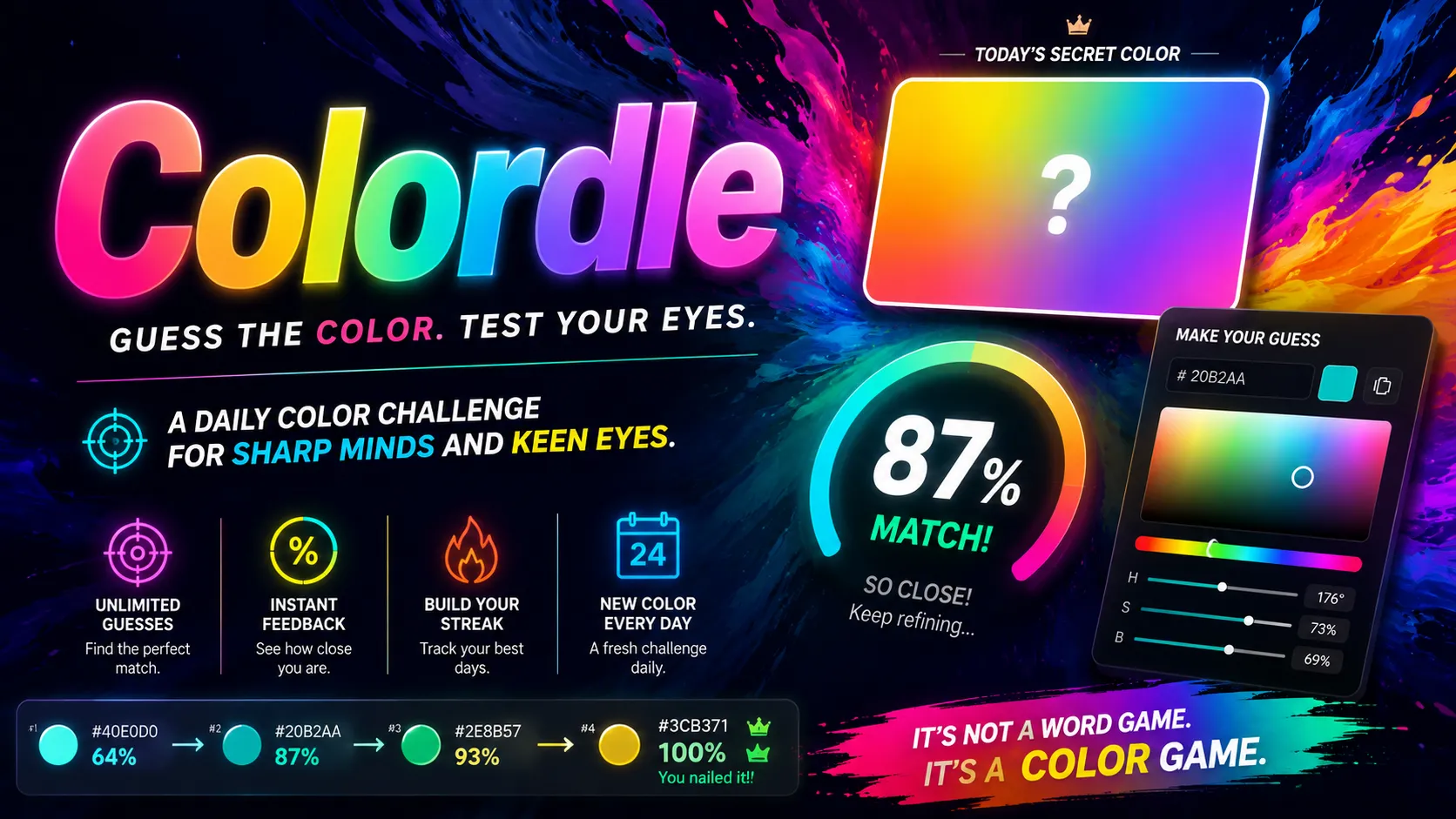
What is Colordle?
Colordle is a daily color guessing game that swaps letters for pure visual instinct. Instead of spelling a word, you choose a color and try to match the hidden target shade as closely as possible.
The trap is simple but brutal: the game tells you how close you are with a percentage score, but it does not hand you the answer. A tiny shift in hue, brightness, or saturation can push you closer to victory—or send your confidence straight into the color void.
Colordle Game Rules (The Catch / The Trap)
Colordle is about reading color feedback, not decoding letters.
- You guess a color.
- The game returns a similarity percentage.
- A higher percentage means your guess is closer to the hidden daily color.
- A lower percentage means your current direction is probably wrong.
- The daily target changes, so each puzzle becomes a fresh battle against your own eyes.
Think of each guess like tuning a dial:
Too red? → shift hue.
Too dull? → raise saturation.
Too dark? → increase brightness.
The game does not need complicated rules to be dangerous. It simply asks: can you actually see the difference?
How To Play Colordle?
Step 1: Start with a bold base color
Player Guesses: Bright red-orange
Result: 42% match
What This Means: You are somewhere in the warm zone, but the target is not this intense or this red.
Step 2: Shift the hue
Player Guesses: Softer orange-yellow
Result: 67% match
What This Means: Better. The hidden color may be warmer and lighter than your first guess.
Step 3: Adjust brightness and saturation
Player Guesses: Muted peach
Result: 84% match
What This Means: You are closing in. The color family feels right, but the exact shade still needs tuning.
Step 4: Fine-tune the final shade
Player Guesses: Pale peach with slightly less saturation
Result: 96% match
What This Means: Very close. Now the puzzle becomes a delicate fight over tiny visual differences.
Strategy & Tips
Start with a strong, recognizable color so the first score gives you a useful direction. Red, blue, green, yellow, purple, and orange are good opening anchors because they make the game’s response easier to interpret.
After that, change only one major thing at a time. If you adjust hue, brightness, and saturation all together, you may not know which change helped. Treat every guess like an experiment: one move, one result, one lesson.
When you get a high score, slow down. The final stretch is where Colordle becomes sneaky. Big changes can ruin a good path, so make smaller tweaks and trust the percentage more than your panic.