Why Humans Can't Remember Exact Colors (And How to Train Your Eye)
Quick Answer
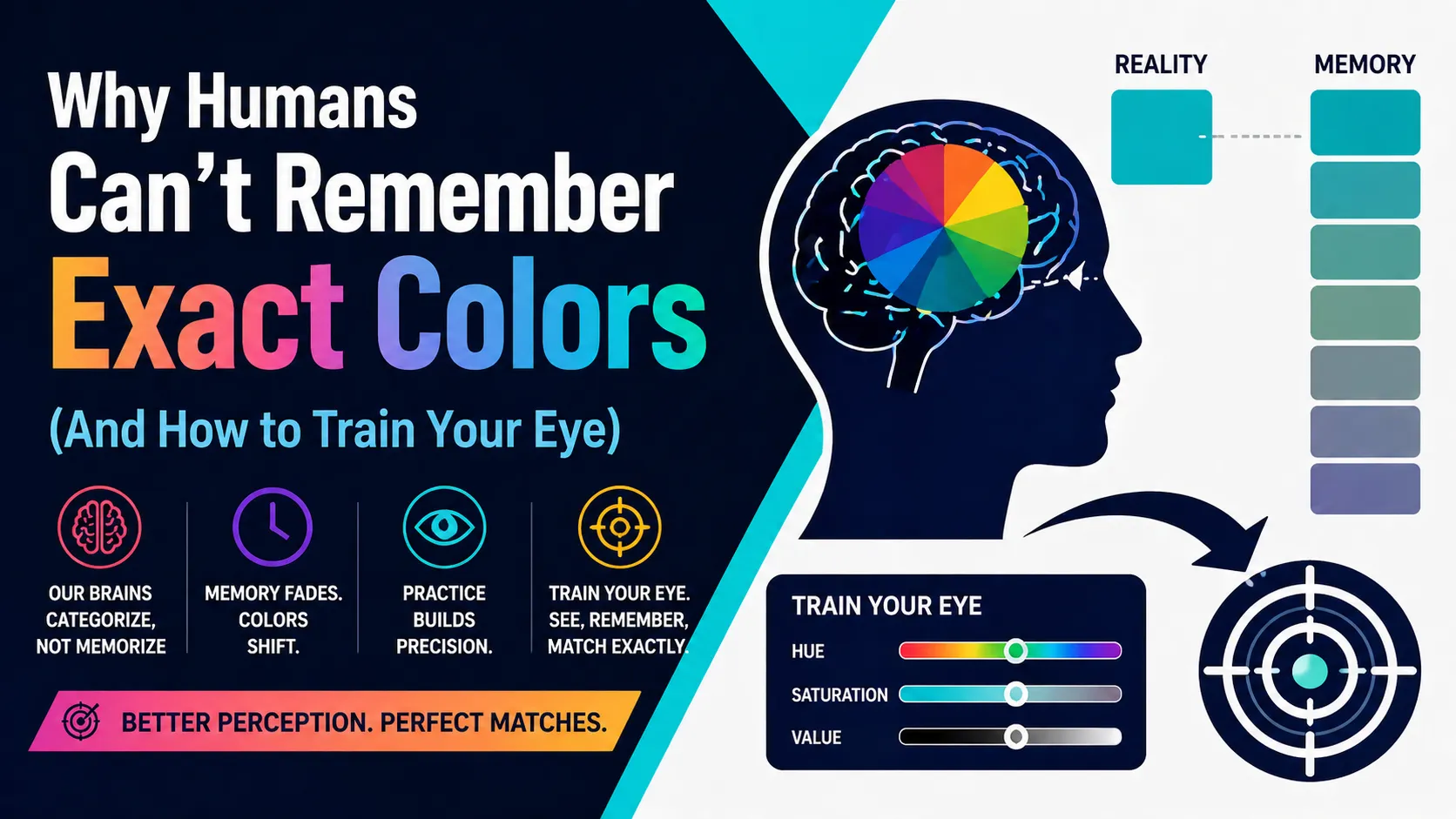
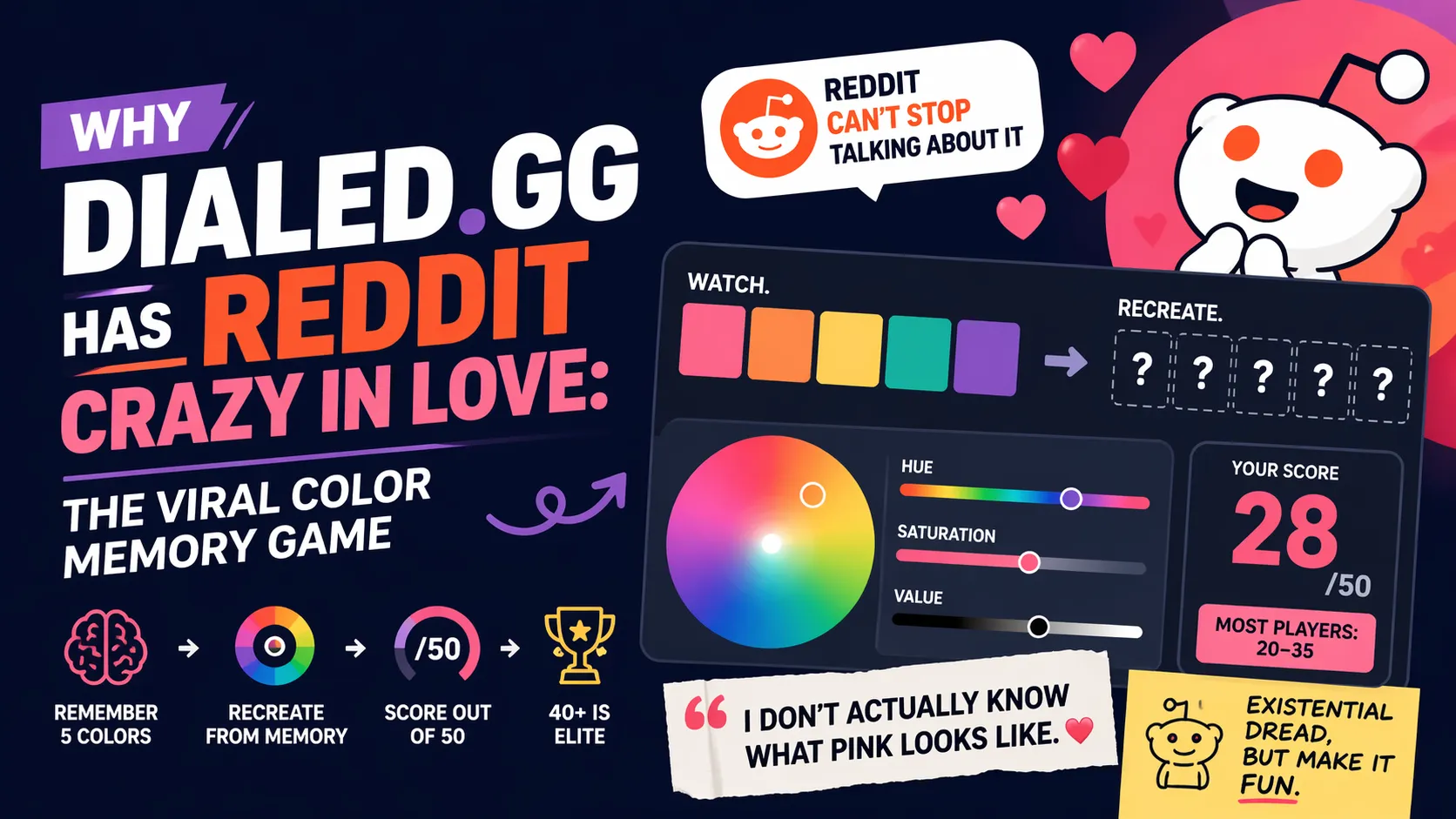
Humans can’t remember exact colors because our brains use categorical perception: we file every shade into broad mental buckets like “red,” “blue,” or “teal” rather than storing precise numerical values. Evolution wired us for fast survival decisions (“that berry looks ripe”), not pixel-perfect recall. As a result, the same color you saw five seconds ago can shift dramatically in memory. That’s why matching a color exactly — whether in design software or in Dialed Color Game — feels so difficult. The game deliberately trains the rare skill of absolute color memory using HSV sliders.
Why This Matters for Color Perception
Accurate color memory is essential for anyone who works with palettes, contrast, or visual communication. Designers need it to maintain brand consistency. Artists rely on it when mixing paints or choosing digital hues. Even photographers use it to correct white balance or match skin tones across shots. Without it, colors drift: a logo that looked perfect on screen suddenly feels off on print, or a UI palette loses its emotional impact. Understanding why memory fails helps you stop fighting your brain and start training it.
How It Works
Your visual system processes millions of colors but stores only a handful in working memory. Here’s the key mechanism:
- Categorical coding: The brain assigns colors to prototypes (the “best” red, the “best” green). Subtle variations get rounded to the nearest category.
- Limited visual short-term memory: You can hold roughly 3–4 distinct colors accurately for just 10–30 seconds before interference sets in.
- Verbal overshadowing: Naming a color (“that’s turquoise”) actually makes the exact shade harder to recall, because language overrides raw visual data.
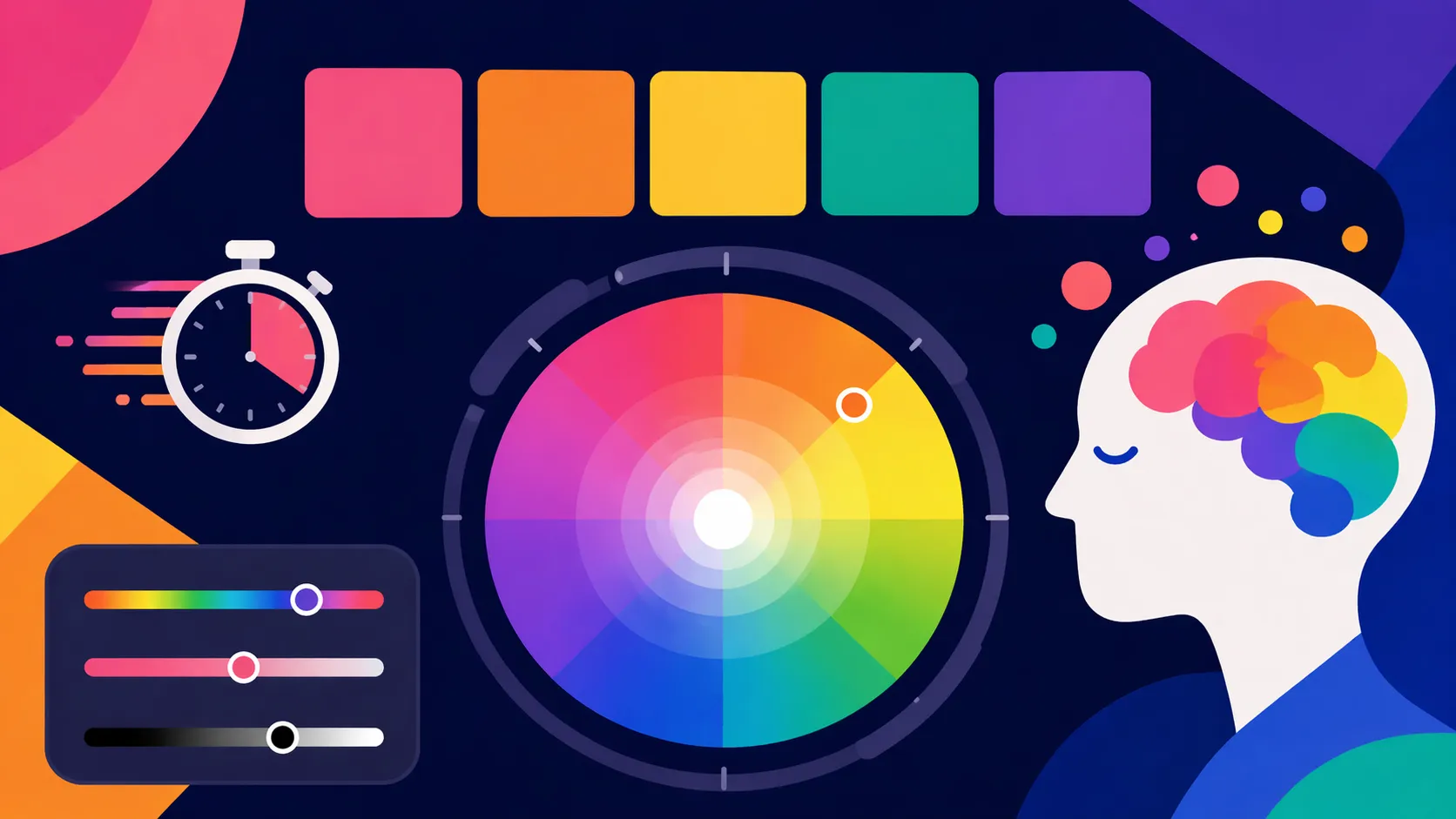
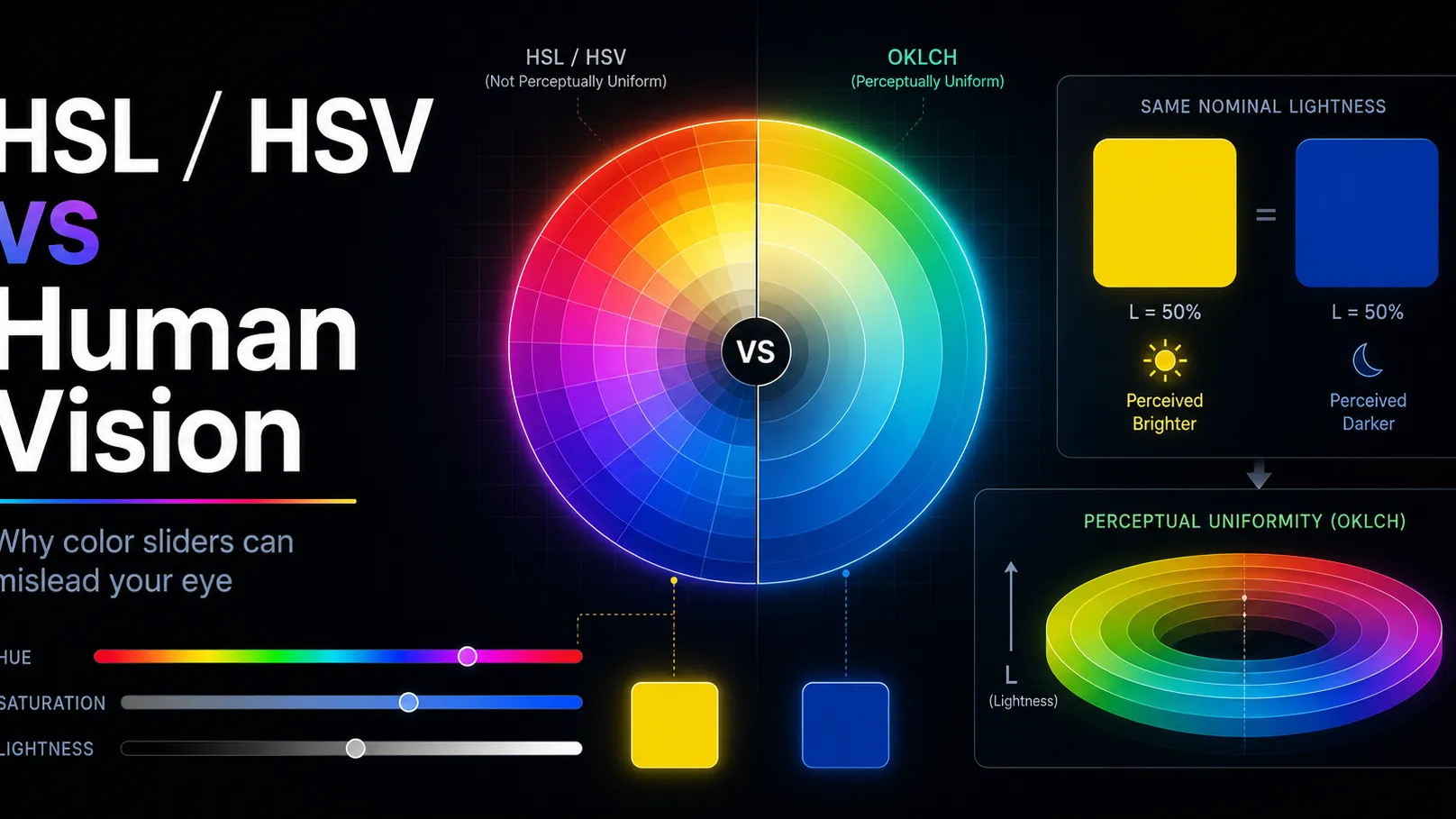
- HSV sensitivity: Hue shifts are most noticeable, followed by saturation, then value. That’s why Dialed Color Game scores heavily on hue accuracy — your brain already struggles most with it.
Practical Examples
Imagine seeing this exact teal:
- HEX: #40E0D0
- RGB: 64, 224, 208
- HSV: 174°, 71%, 88%
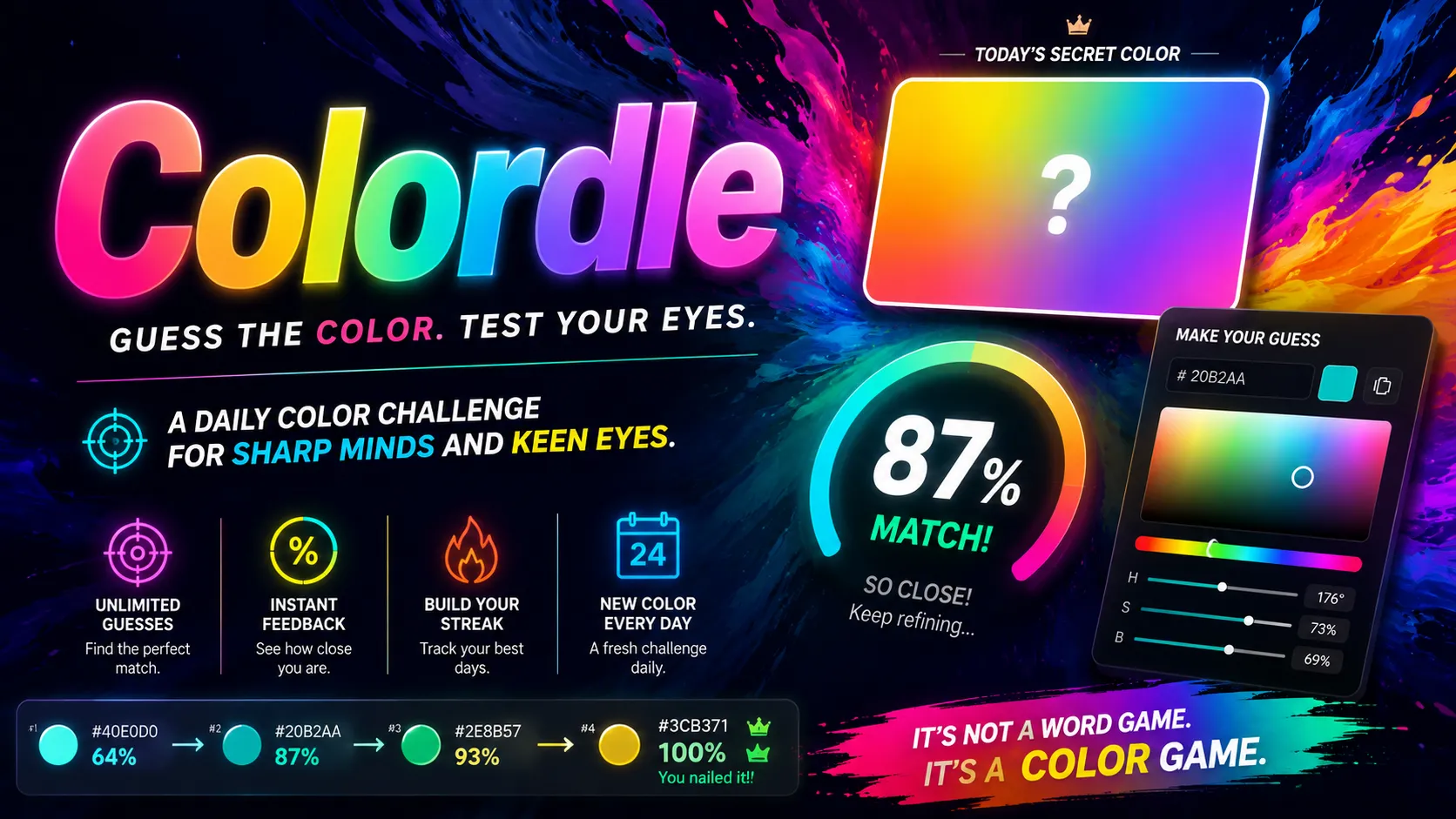
Five minutes later, most people remember “teal” and recreate something closer to #20B2AA (a greener, less saturated version). In Dialed Color Game, the timer forces you to lock in that precise 174° hue before it fades. Another example: matching a brand’s signature red (#E30613). Memory alone usually lands you in the orange-red zone because the brain defaults to the more common “fire-engine red” prototype.
Common Mistakes
- Relying on color names: “Sky blue” or “forest green” are too vague and push you toward average shades.
- Comparing colors side-by-side in memory: Your brain compares the remembered color to what you think it should be, not to the original stimulus.
- Ignoring value and saturation: Many people match hue correctly but let brightness drift, making the whole color feel “wrong.”
- Over-trusting digital tools without training: Eye-dropping a color is easy, but recreating it from memory without a reference is where most designers stumble.
How To Train Your Eye
The good news? Color memory is a trainable skill. Here’s how to improve it fast:
- Play Dialed Color Game daily — the 10-second memory window followed by precise HSV sliders directly combats categorical drift.
- Practice “blind matching”: look at a reference color for 5 seconds, hide it, then recreate it using only HSV sliders or physical paint mixing.
- Use a limited palette exercise: restrict yourself to 5 hues and force exact value/saturation matches before adding new colors.
- Study contrast and context: place the same color next to different backgrounds to see how your perception shifts (simultaneous contrast).
- Track progress: note your Dialed scores over time. Most players see a 30–50% improvement in hue accuracy after two weeks of consistent play.
Train deliberately and the gap between what you see and what you remember shrinks dramatically. Your eye becomes a precision instrument instead of an approximate one.
Continue Reading
More guides, comparisons, and explainers related to the same games and topics.
Related Games
Browse games connected to the ideas, mechanics, or categories covered in this article.