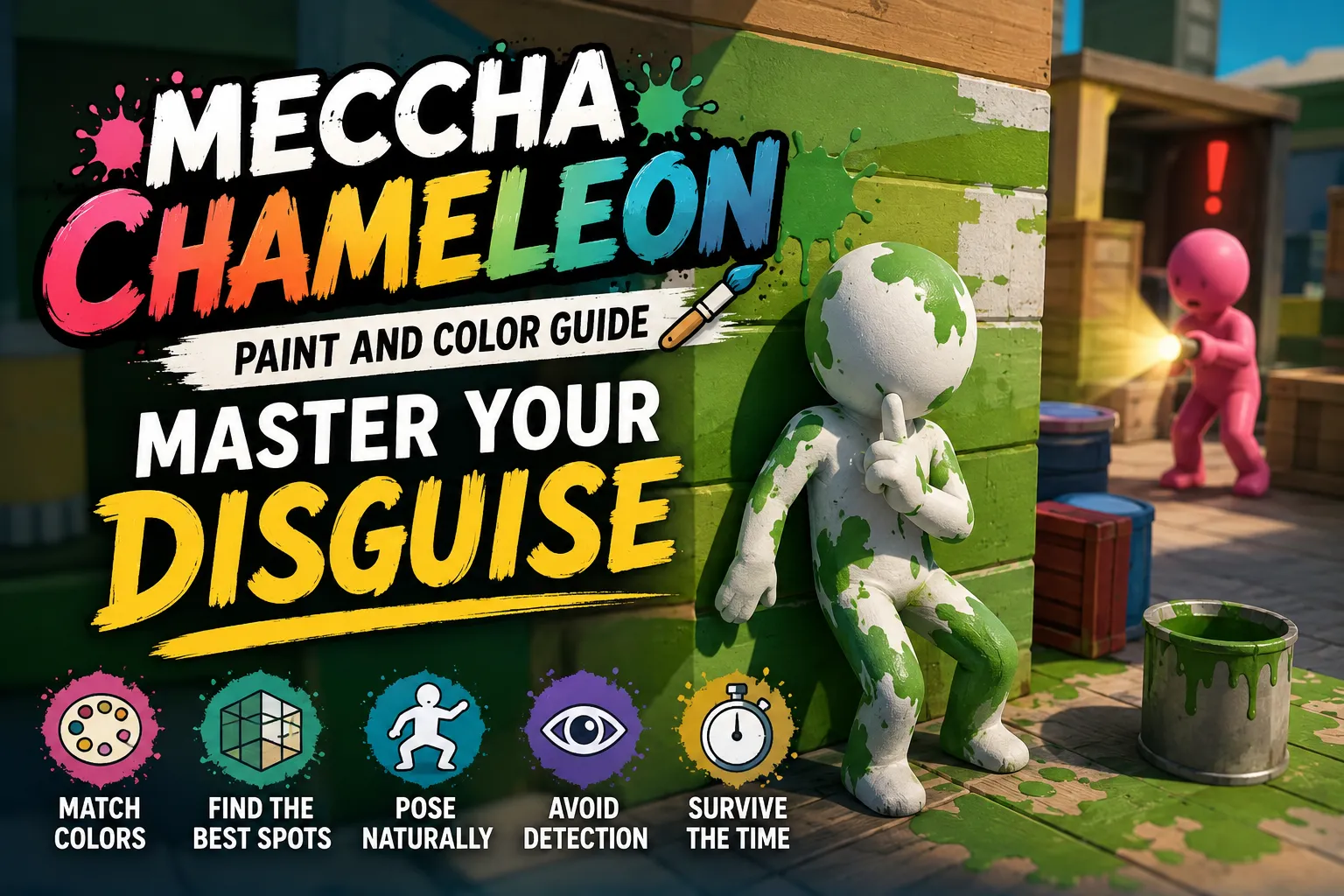
MECCHA CHAMELEON Paint and Color Guide: Master Your Disguise
Quick Answer
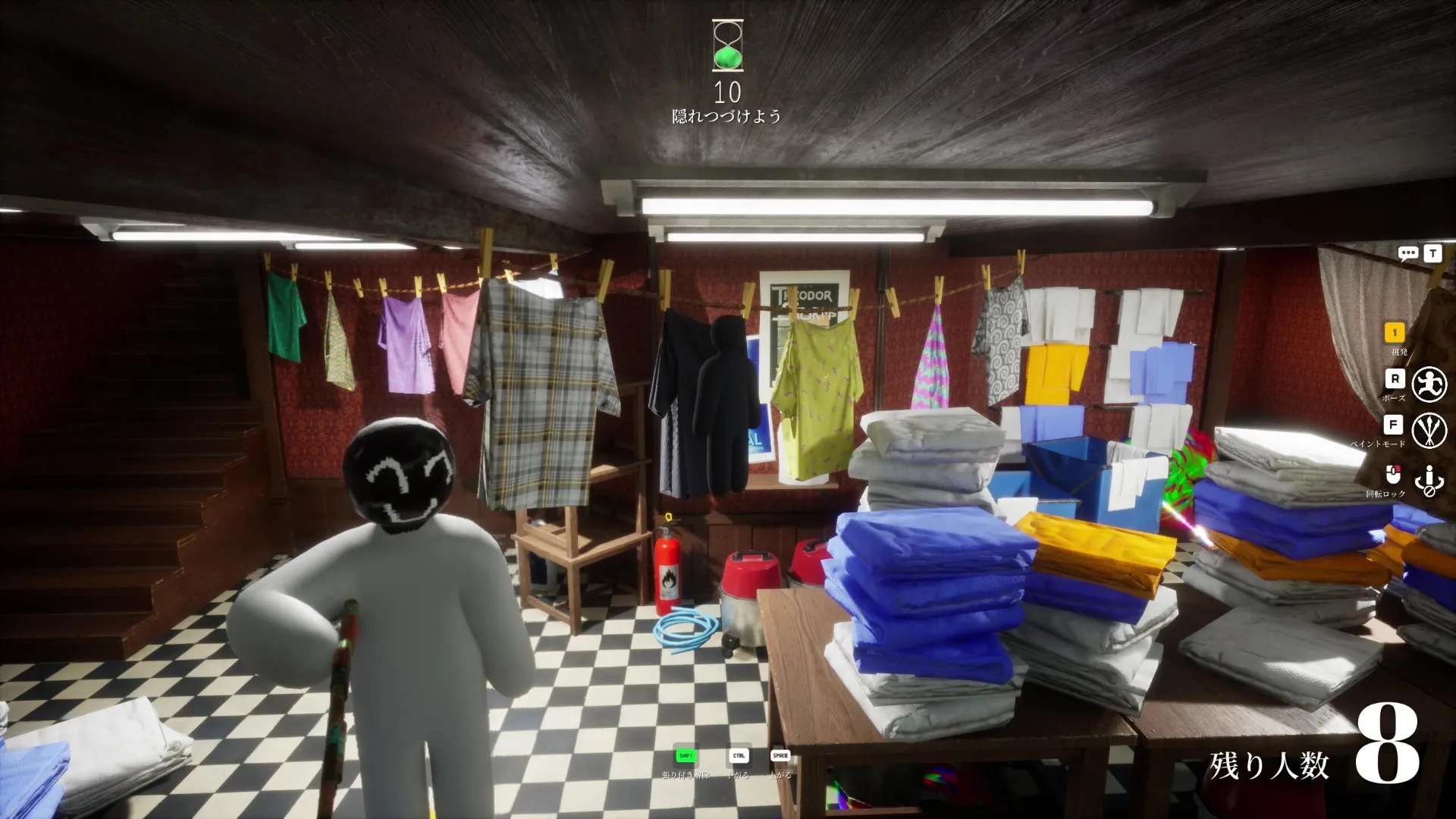
MECCHA CHAMELEON is a multiplayer hide-and-seek party game where hiders paint their bodies to blend into the stage while seekers try to find everyone before time runs out. The key to surviving as a hider is not just picking the right color. You need to choose a believable surface, match lighting, break up your outline, and hold a pose that makes your body look like part of the environment.
What Is It?
MECCHA CHAMELEON is a PvP hide-and-seek game built around active camouflage instead of simple hiding. Hiders use paint to copy nearby walls, floors, props, shadows, or textures. Seekers win if they find all hidden players before the timer ends.
The game stands out because hiding is not passive. You are not just choosing a corner and waiting. You are creating a disguise under pressure, then trusting your color match and pose while another player scans the room.
It works best for players who enjoy:
- Social party games with funny mistakes and close calls
- Prop Hunt-style tension without becoming a fixed prop
- Creative stealth gameplay where visual tricks matter
- Short multiplayer rounds that are easy to replay
How To Play
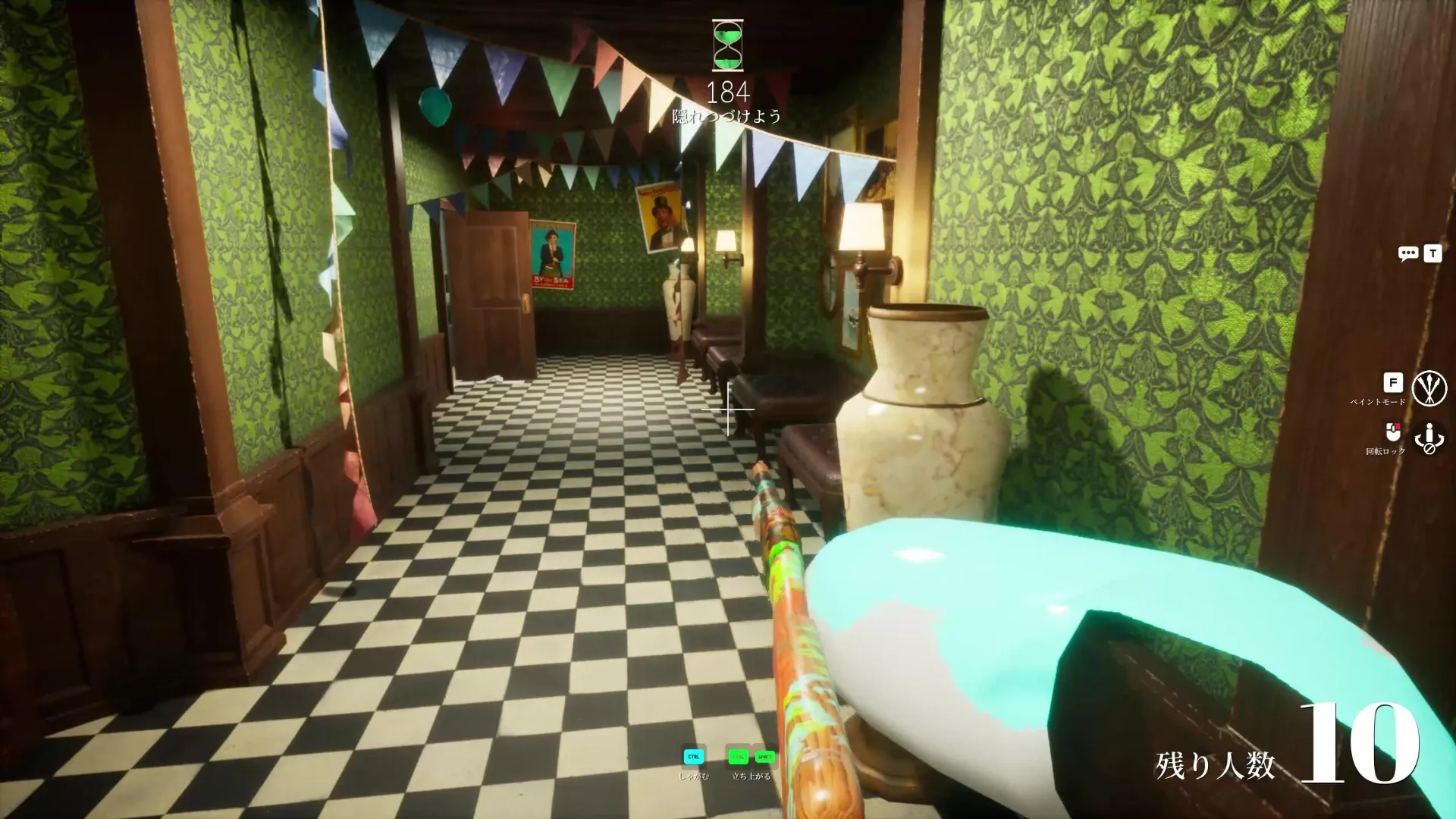
The basic rule is simple: hiders must avoid detection, and seekers must identify every hidden player before the timer ends. The fun comes from the gap between what looks hidden to you and what looks suspicious to another player.
For hiders, the round usually plays like this:
- Pick a hiding zone early. Do not spend the whole prep phase wandering.
- Study the background. Look for colors, shadows, repeated shapes, and clutter.
- Paint your body. Match the main surface first, then refine edges and contrast.
- Choose a pose. Your silhouette matters as much as your color.
- Stay calm. Sudden movement gives away even a good disguise.
For seekers, the round is about observation:
- Scan for wrong outlines, not just wrong colors.
- Check areas with too-perfect patches or odd shadows.
- Watch for hiders who panic and move too soon.
- Revisit strong hiding areas after your first sweep.
Paint and Color Basics
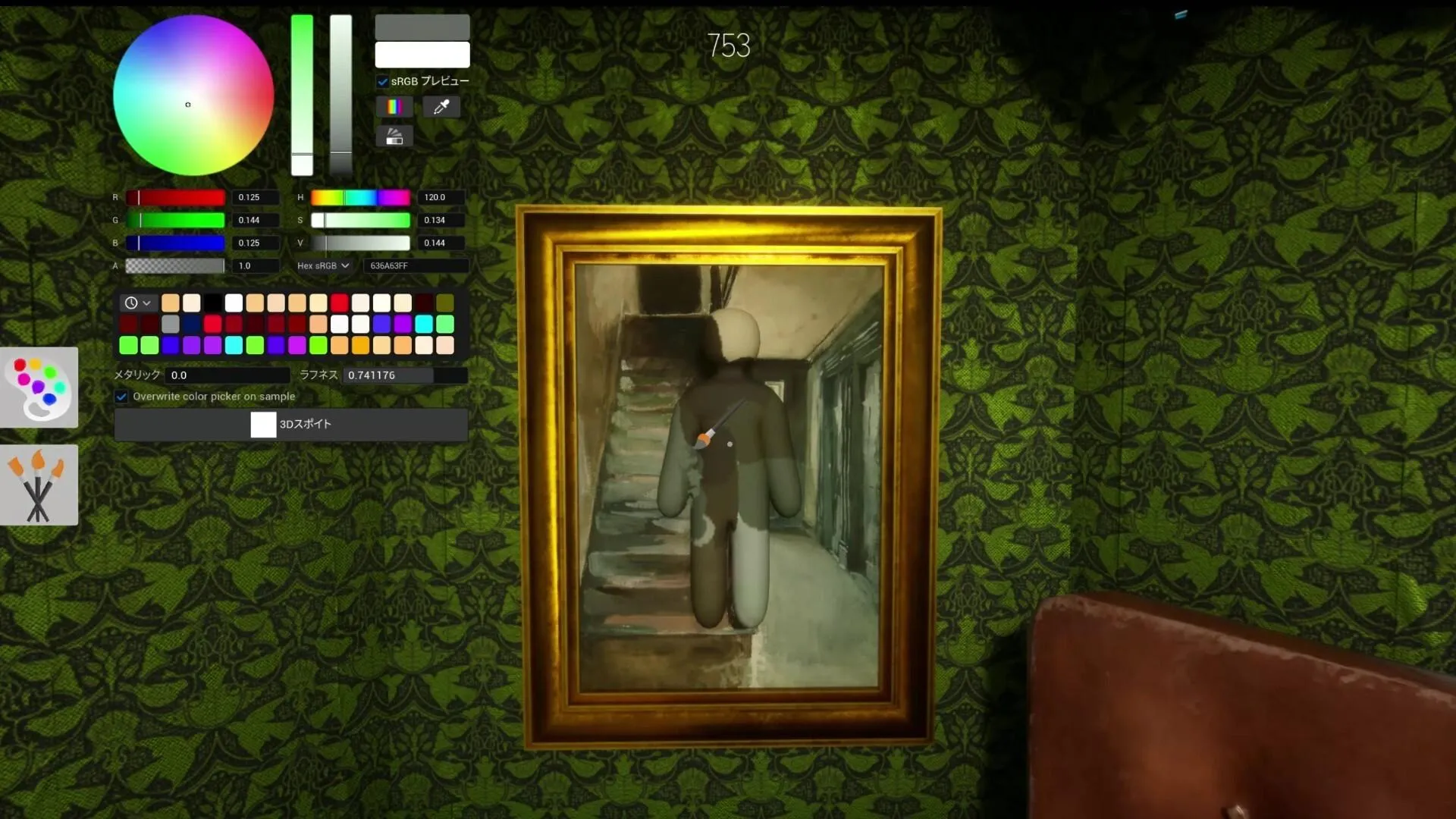
Good painting starts with the background, not the palette. A perfect color on a bad surface still looks suspicious. A slightly imperfect color in a noisy corner can survive much longer.
Use this priority order when painting:
- Base color — match the dominant wall, floor, object, or shadow.
- Brightness — adjust lighter and darker areas based on stage lighting.
- Edges — hide hands, feet, head shape, and high-contrast outlines.
- Texture logic — add stripes, blocks, or patches only if the background has them.
- Pose fit — make your body shape explainable within the scene.
A common beginner mistake is chasing the exact hue while ignoring light. Copying the right color is not enough. You also need to match how the room is lit.
Best Color-Matching Strategy
The best disguise is usually a simple one that matches the room’s visual logic. Do not overpaint every limb with random detail. Focus on making the seeker’s first glance slide past you.
Use these practical rules:
- Match large surfaces first. Walls, floors, doors, boxes, and signs are easier than tiny props.
- Use clutter as cover. Busy areas forgive imperfect color better than clean flat walls.
- Avoid pure bright colors unless the stage uses them. Over-saturated paint stands out fast.
- Paint shadows deliberately. A darker side can make your body look attached to the scene.
- Keep your outline boring. A weird body shape is easier to notice than a slightly wrong shade.
The strongest hiders often look less like “a hidden person” and more like a boring patch of scenery.
Best Hiding Spots
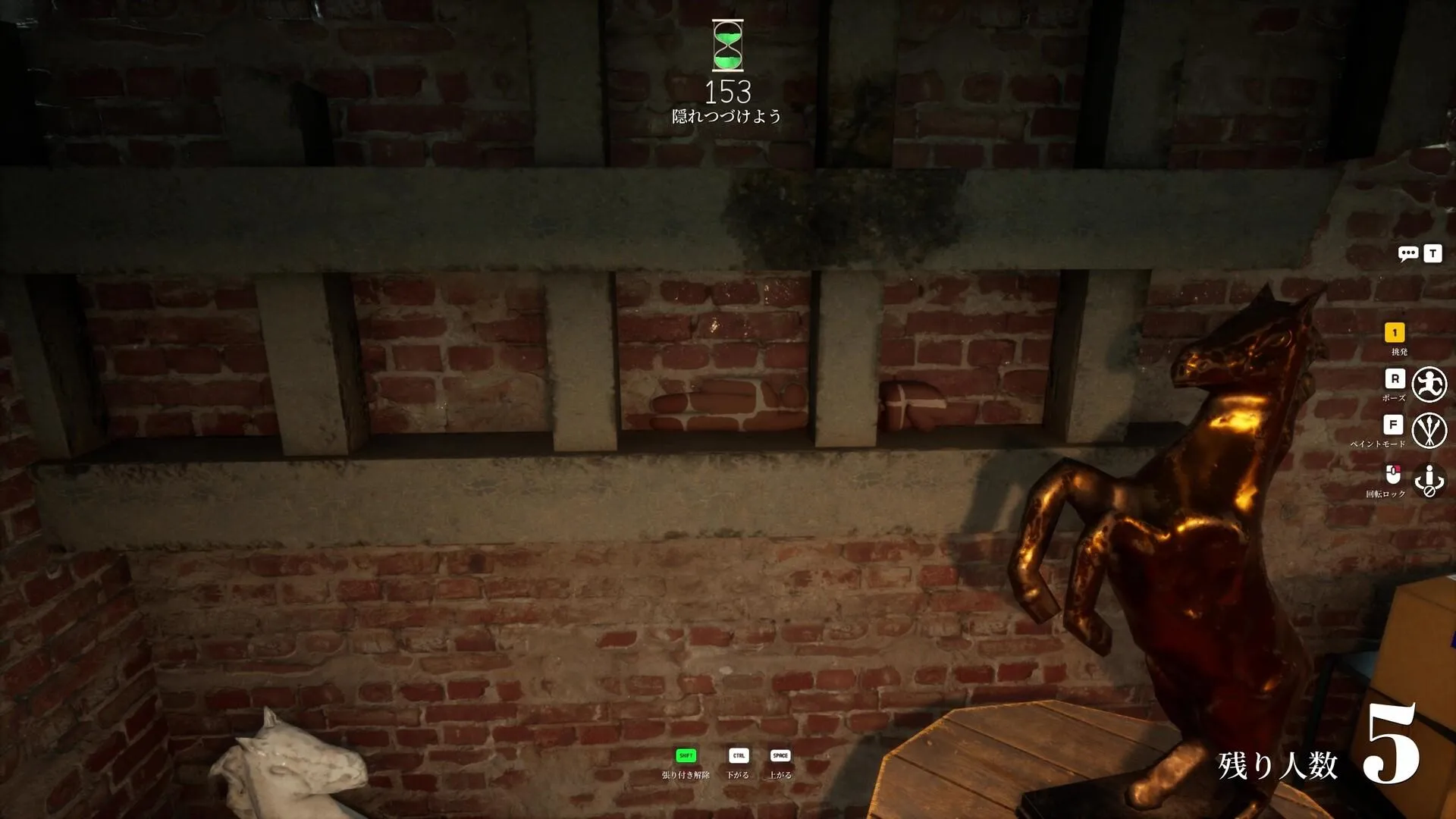
The best hiding spots are places where your shape has a reason to exist. Do not hide in the middle of a plain wall unless your paint and pose are extremely clean.
Look for:
- Corners with multiple colors where your outline breaks naturally
- Stacks of objects that make body shapes less obvious
- Walls with panels, posters, or shadows that let you copy a pattern
- Floor edges and door frames where vertical or horizontal poses make sense
- Busy rooms where seekers must process too much visual information
Avoid:
- Empty walls with no texture
- Brightly lit open spaces
- Symmetrical areas where your body disrupts the pattern
- Spots that force you into an unnatural pose
- Hiding places that every beginner chooses first
Tips
Winning as a hider is about speed, restraint, and believable camouflage. You do not need museum-level painting. You need a disguise good enough to survive a moving player’s inspection.
- Commit early. Pick your hiding zone quickly, then use the rest of the prep time to refine paint and pose.
- Paint from far-view logic. Ask: “Would this look normal from across the room?” Seekers rarely inspect every pixel.
- Do not over-detail. Too many painted marks can make you look more human, not less.
- Hide your head shape. The head is usually one of the easiest body parts to recognize.
- Blend with shadow lines. A body aligned with a natural shadow can be harder to separate.
- Stop moving before seekers arrive. Movement is the fastest way to lose a good spot.
- Use decoy confidence. Sometimes a slightly obvious spot survives because seekers assume nobody would choose it.
Seeker Tips
The best seekers search for visual mistakes, not hidden players. Instead of asking “Where is someone hiding?”, ask “What part of this room looks slightly wrong?”
- Look for edges that do not belong to the object behind them.
- Check color patches that are too smooth compared with the environment.
- Watch for human proportions: head, shoulders, hands, feet, and bent limbs.
- Sweep cluttered areas twice because good hiders prefer them.
- Pause before leaving a room; hiders often move when they think you are gone.
A strong seeker does not rush every corner. They slow down near areas where a painted body could plausibly become part of the set.
Common Mistakes
Most beginners lose because they paint too late, hide in too clean a spot, or forget about their silhouette. Color is only one part of the disguise.
Avoid these errors:
- Wandering too long. A half-painted body is easy to catch.
- Ignoring brightness. A correct color that is too bright still stands out.
- Facing the wrong direction. Your pose should match the line of the surface.
- Choosing famous hiding spots every round. Repeated spots get checked first.
- Panicking when a seeker comes close. Stillness often saves you.
Difficulty and Skill Curve
MECCHA CHAMELEON is easy to understand but surprisingly skill-based once players learn how to read color and shape. New players can enjoy the chaos immediately, but better players win by improving three skills: fast spot selection, believable painting, and calm posing.
The difficulty rises when seekers become more experienced. Early rounds feel silly and forgiving. Later rounds become a visual mind game where tiny mistakes matter.
Is It Worth Playing?
MECCHA CHAMELEON is worth trying if you want a funny, creative multiplayer game that rewards quick visual thinking. It is not a deep competitive stealth game, but it has a strong loop for groups, streams, and casual sessions.
You should try it if you like:
- Quick rounds with friends
- Hide-and-seek games
- Painting and disguise mechanics
- Funny failures and replayable multiplayer moments
You may not like it if you want:
- Long solo progression
- Serious ranked stealth gameplay
- Complex combat systems
- A quiet single-player puzzle game
Final Take
The best MECCHA CHAMELEON players master disguise by thinking like both an artist and a liar. Your paint must match the room, your pose must explain your shape, and your hiding spot must survive a suspicious player’s scan.
For hiders, the winning formula is simple: choose a believable surface, paint the big colors first, match the lighting, hide your outline, and stop moving. For seekers, focus on shapes, edges, and lighting mistakes. That back-and-forth is what makes MECCHA CHAMELEON more than a simple party game: every round becomes a test of observation, creativity, and nerve.
Continue Reading
More guides, comparisons, and explainers related to the same games and topics.



Related Games
Browse games connected to the ideas, mechanics, or categories covered in this article.